
Best Buy Robot Vacuum
Add a review FollowOverview
-
Founded Date April 17, 1984
-
Sectors Education Training
-
Posted Jobs 0
-
Viewed 45

Company Description
10 Healthy Robot Vacuums Habits
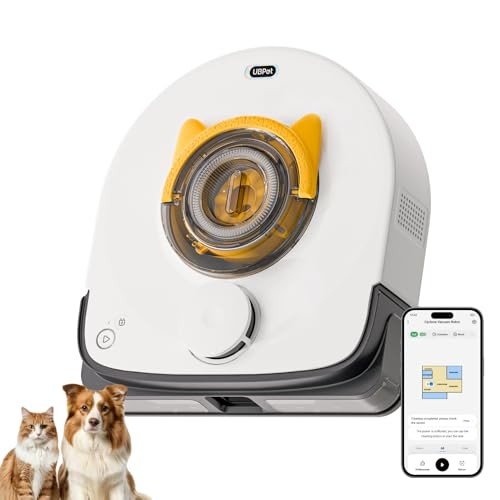
The Rise of Robot Vacuums: A Comprehensive Guide
As technology continues to advance, our homes are ending up being significantly automated, making jobs easier and more efficient. Amongst these innovations is the robot vacuum, an appliance that has actually acquired tremendous appeal for many years. These automated cleaning gadgets are developed to enhance home maintenance while allowing users to save time and effort. In this article, we will explore the features, advantages, and distinctions in between popular robot vacuums, as well as answer regularly asked questions.
Comprehending Robot Vacuums
A robot vacuum, or robovac, is a self-operating device that autonomously cleans up floors. Equipped with various sensors and advanced navigation features, these vacuums can pass through a range of floor types, avoid barriers, and even return to their charging stations when low on battery. The convenience offered by robot vacuums has made them a popular choice for busy families and individuals seeking to streamline their cleaning routines.
Key Features of Robot Vacuums
When choosing a robot vacuum, consumers will usually try to find several crucial features:
| Feature | Description |
|---|---|
| Navigation Technology | Includes LIDAR mapping, camera navigation, or basic infrared sensors |
| Suction Power | Measured in Pascals (Pa), shows the strength of suction |
| Battery Life | Refers to how long the vacuum can operate before requiring a charge |
| Dustbin Capacity | The volume the dustbin can hold (measured in liters or milliliters) |
| Smart Connectivity | Capability to connect to Wi-Fi and be managed via a smart device app |
| Multi-Surface Cleaning | Ability to clean numerous types of floors (carpet, tile, wood) |
| HEPA Filter | Unique filter system for trapping allergens |
| Scheduler | Allows users to set cleaning times and frequencies |
Benefits of Robot Vacuums
Robot vacuums offer several advantages over traditional vacuum cleaners. Here are some compelling reasons to consider bringing one into your home:
-
Time-Saving: With the capability to clean autonomously, robot vacuums enable users to take part in other activities or merely unwind while the vacuum does the work.
-
Convenience: Most models include scheduling functions and mobile app connection, making it easy to handle cleaning sessions from anywhere.
-
Compact Design: Robot vacuums are normally smaller than conventional vacuums, allowing them to access difficult locations, such as under furnishings.
-
Smart Features: Many robot vacuums are geared up with smart technology, permitting them to learn the layout of a home over time and clean more effectively.
-
Improved Air Quality: Models with HEPA filters can help to capture allergens and particulates, adding to improved air quality in the home.
Popular Robot Vacuum Models
With a myriad of choices on the market, consumers frequently find it challenging to choose the ideal design for their needs. Below is a comparison of some popular robot vacuum models based upon functionality, rate, and unique functions.
| Design | Cost | Suction Power (Pa) | Battery Life | Dustbin Capacity (L) | Smart Features |
|---|---|---|---|---|---|
| iRobot Roomba 980 | ₤ 699 | 1700 | 120 mins | 0.6 | Wi-Fi, Alexa/Google Assistant compatibility |
| Eufy RoboVac 30C | ₤ 299 | 1500 | 100 mins | 0.6 | Wi-Fi, Remote control, Boundary strips included |
| Neato Botvac D7 | ₤ 849 | 2000 | 120 minutes | 0.7 | Wi-Fi, powerful mapping, Zone cleaning |
| Roborock S6 | ₤ 649 | 2000 | 180 minutes | 0.48 | Wi-Fi, mopping function, personalized cleaning zones |
| Ecovacs Deebot T8 | ₤ 799 | 1500 | 240 minutes | 0.48 | Wi-Fi, mopping function, advanced things recognition |
Frequently Asked Questions about Robot Vacuums
1. How do robot vacuums prevent obstacles?
Robot vacuums utilize sensors, cams, and advanced navigation technology to detect barriers in their courses. Higher-end designs might utilize LIDAR innovation to map out the room, while others may count on infrared sensing units to prevent accidents.
2. Can robot vacuums clean carpets and carpets?
Yes, a lot of contemporary robot vacuums are developed to clean a variety of floor types, including carpets and rugs. Nevertheless, suction power might differ, so it is very important to pick a design with strong suction for reliable carpet cleaning.
3. Do robot vacuums require much upkeep?
Robot vacuums are low-maintenance, but users need to occasionally clean up the brushes, empty the dustbin, and change filters to make sure optimum performance. The frequency of maintenance depends on use and the type of debris being gathered.
4. For how long does it consider a robot vacuum to clean up a space?
The time a robot vacuum takes to clean a space varies based on its navigation innovation and the size of the space. Usually, it takes about 45 minutes to an hour to clean a typical room.
5. Are robot vacuums loud when operating?
Robot vacuums are typically quieter than conventional vacuums. The noise level varies by model; some run at about 55 decibels, which is roughly the sound of a normal conversation.
Robot vacuums represent a significant advance in home cleaning technology, supplying convenience, efficiency, and ease of use for today’s busy lifestyles. When considering buying one, it’s vital to assess your cleaning requires, automatic floor cleaner types, and preferred functions. By comprehending the benefits and functionalities of different designs, customers can make educated options that improve their home cleaning experience. As these gadgets continue to develop, it’s most likely that they will become a much more integral part of lots of households.
